


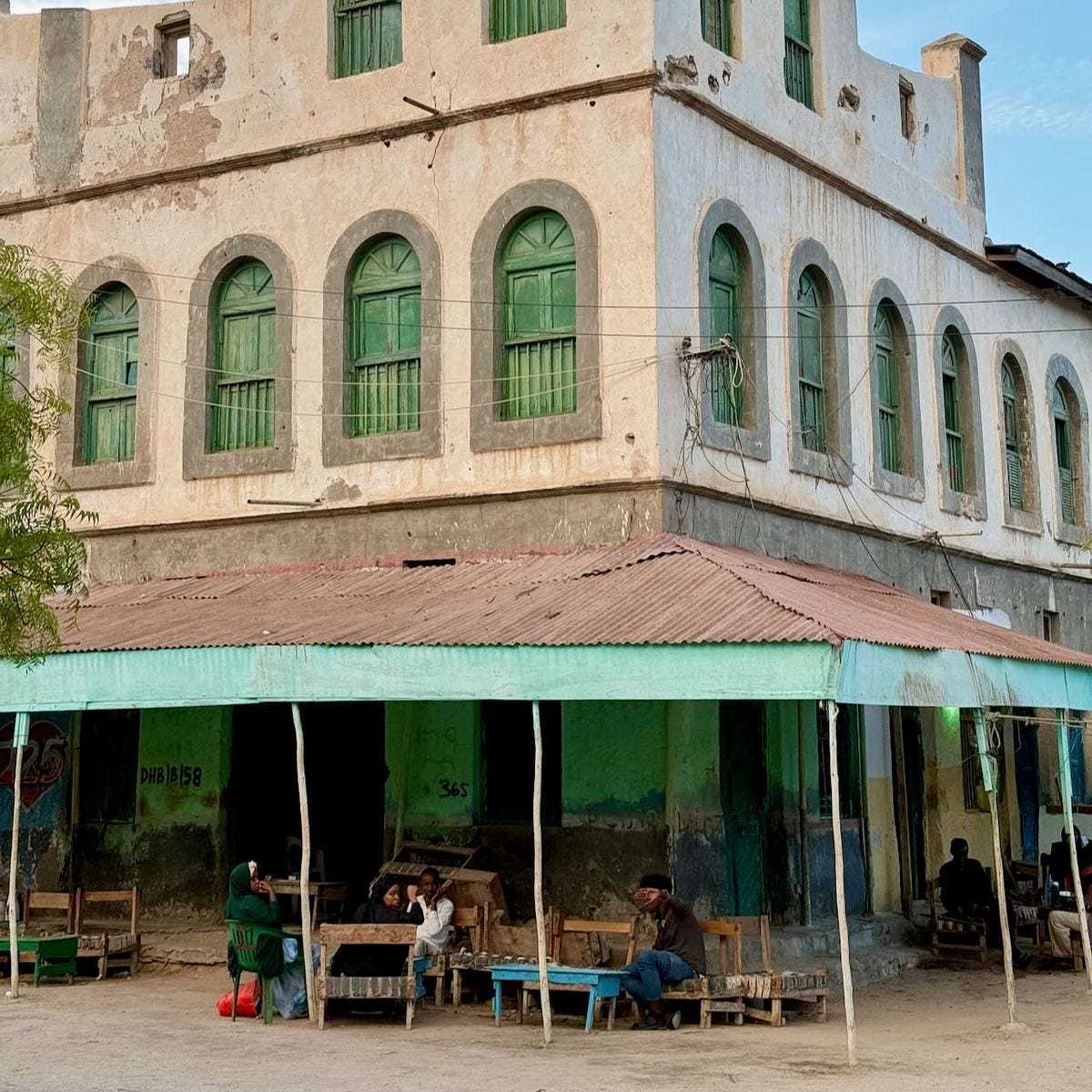
The immigration officer in Hargeisa wanted a document from me, and I was pretty sure I was holding it. Still, he kept asking. I kept handing him my letter of introduction, and that was the problem. It said Somalia. In Somaliland, that’s definitely the wrong country.
The officer spoke English. I do, too. We still couldn’t work out what he needed. An hour passed before he called Guleed, my fixer, and I ended up the last passenger out of the airport.
This was the second hiccup that day. In Addis, Ethiopian Airlines had held me at the gate over a typo on my visa, which was also for Somalia.
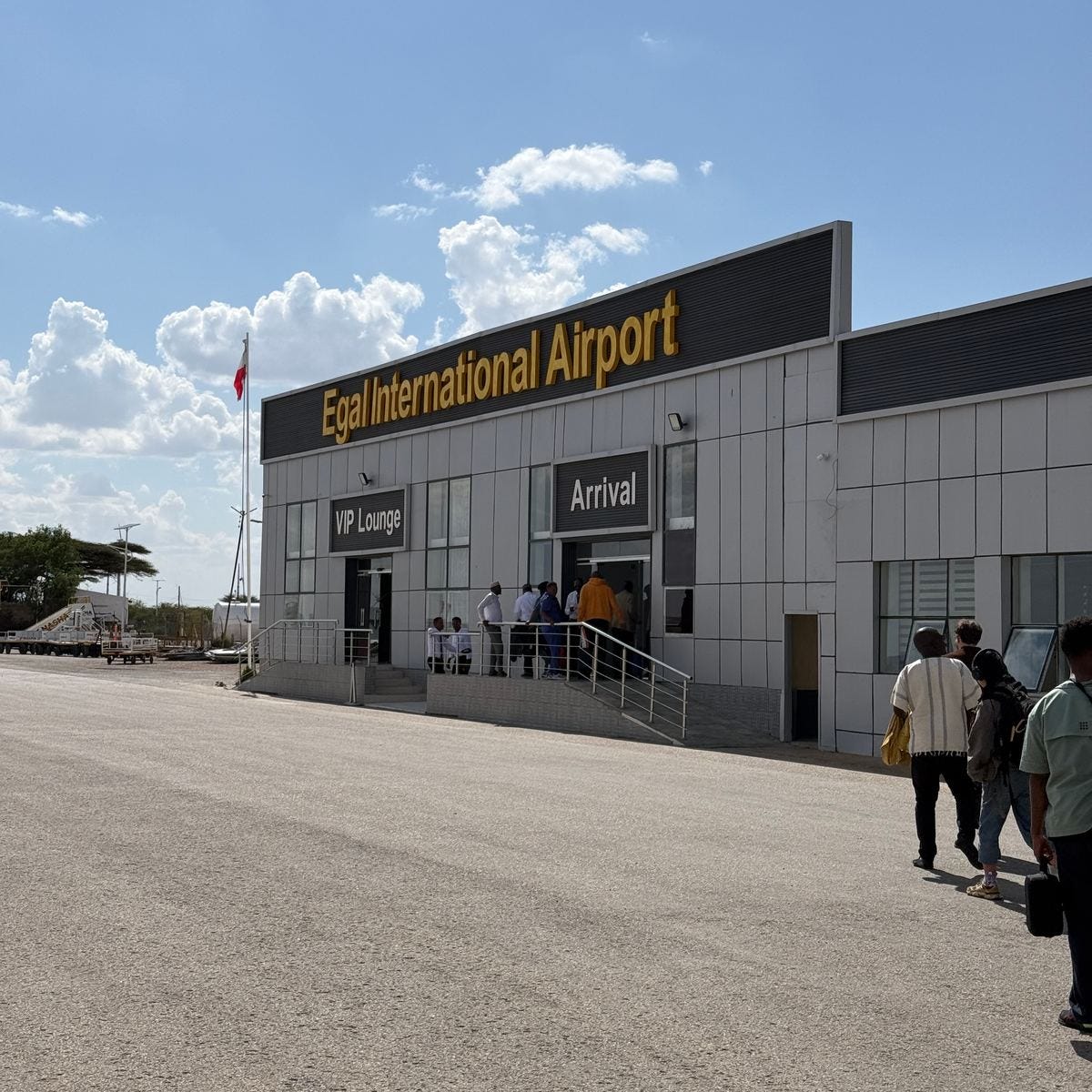
The airport and terminal would fit perfectly in a small American town. I’m unsure how many flights land there daily, but it must be only a few. We made it just past the airport when afternoon prayer came, and my driver pulled over at a mosque and went inside. I waited in the car.
Rebuilt, unrecognized
Somaliland broke away from Somalia in 1991. It has its own currency, its own passport, its own army, and its own government in Hargeisa. As of this writing, one country recognizes it: Israel (Taiwan keeps a representative office there, but Taiwan has its own recognition problems).
That first night, we wandered the downtown market. Dinner was a camel burger. I’ve eaten camel plenty of times. I’ve now taken it to the cheeseburger level. The next morning, we walked the busy livestock market, all camels and Somali goats, a breed that looks like someone dipped a white goat headfirst in black paint.
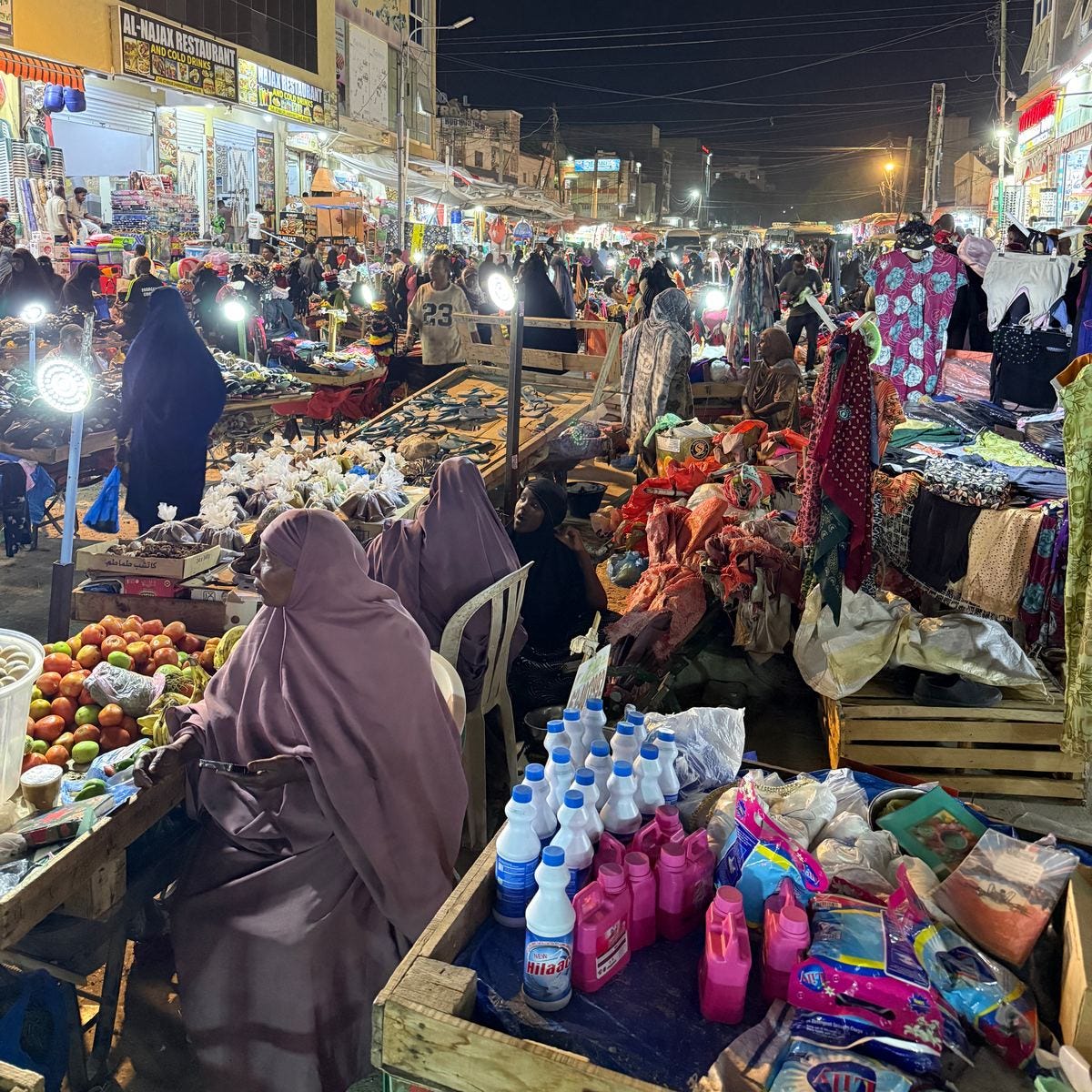
Downtown Hargeisa has a lot of history, and it needed and received a lot of repairs. In 1988, the government in Mogadishu, under Siad Barre, turned its air force on its own northern cities. Between May and July of that year, according to BBC Somali, 90 percent of Hargeisa was destroyed. Estimates of the dead range from 10,000 to 100,000, depending on the source. The city was rebuilt largely with money sent home by Somalilanders living abroad. The war memorial in the center of town is a Somali Air Force MiG-17 that crashed nearby, now mounted on a pedestal.
Under new management
Berbera is a port, so lunch was fresh fish, near the port. We headed to the beach, waited for the evening to cool, then meandered through the old town. The fish sellers were inside their shops, cleaning and freezing what they’d caught, and little kids were kicking a rubber football in the street. Every town we passed through had little kids playing soccer in the street. I think it’s like that in most of the world. Hats off to Guleed, who bought soccer balls along our route to give to kids on the street on the condition they not kill each other over ball ownership.
Plenty of people have occupied Berbera. Turkish-directed Egyptian troops landed in late 1874 or early 1875 and remained until 1884.
Berbera was then the capital of British Somaliland until 1941. The Mitchell Cotts Building, named for a British trading and shipping firm, still stands. So are the ruins of a synagogue, Kinisada Yuhuda, in Daroole village. I couldn’t discover much about who worshiped there; untangling local stories from fact is hard.
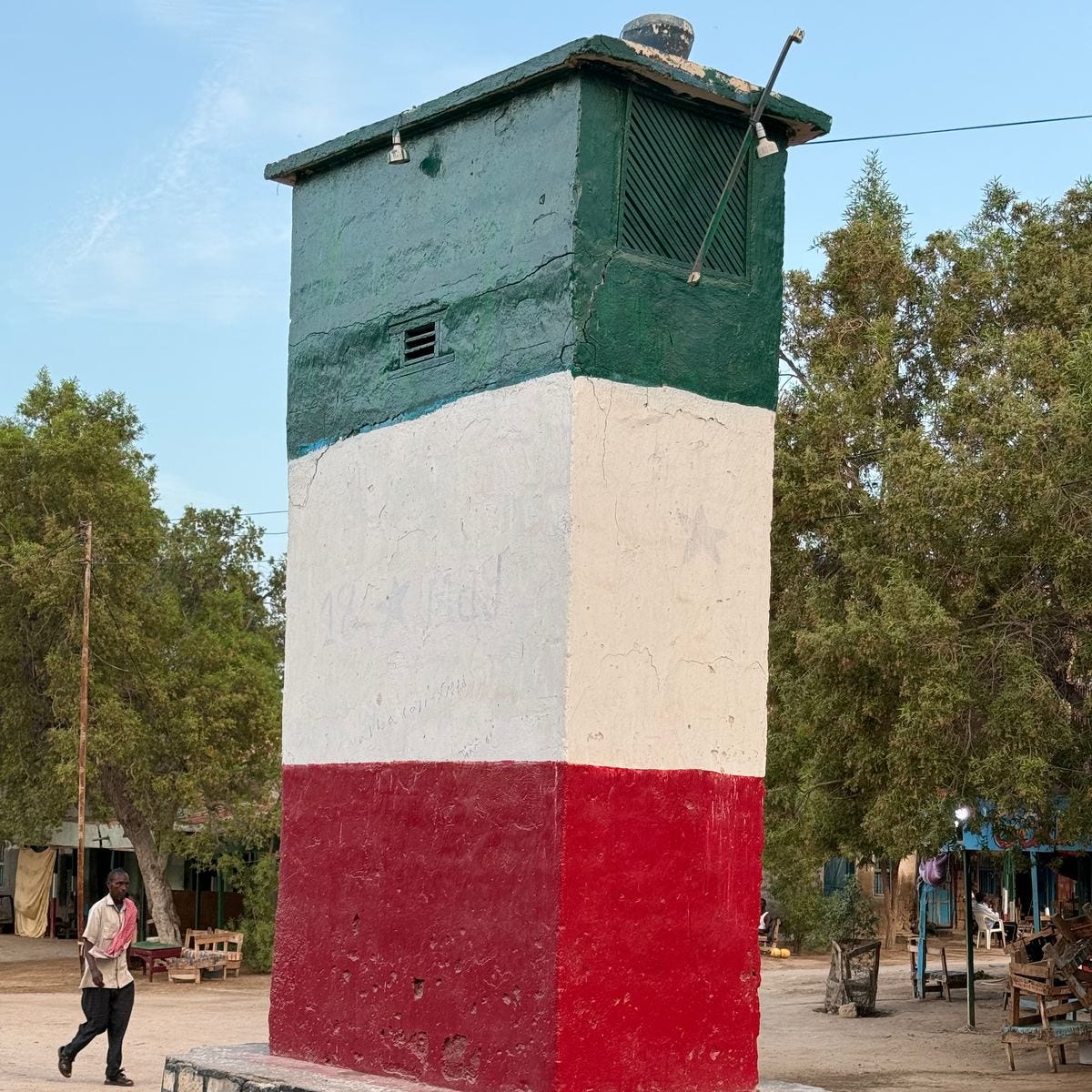
In the square stands a giant radio receiver. The Brits erected it in 1959 to play BBC Somali right there in the square for all to here.
Then came the Soviets. Their naval base was finished in 1969. The museum says that the utilitarian residential blocks on the edge of town went up in 1973 to house Soviet military personnel and the workers building the port. The Soviets withdrew in 1977. Somalilanders live in the blocks now.
The fire’s out
On Tuesday, we drove up to Sheikh, a British hill station on a route traders have used to cross the mountains for centuries. The road climbs. It became greener and cooler, and it rained slightly on the way up. We stopped at the ruins of a British colonial house that was blown up during the civil war. The fireplace is still there. You can picture some colonial officer sitting by it in the evening, comfortably above the heat of the coast. Whose house it was, I still don’t know.
All along the highways in Somaliland, we passed Ethiopians walking toward the coast. They are trying to cross the water to Yemen and then reach the Gulf for work. The International Organization for Migration estimated nearly 235,000 people leaving Ethiopia for the Red Sea coast in a single year.
Heritage, pending
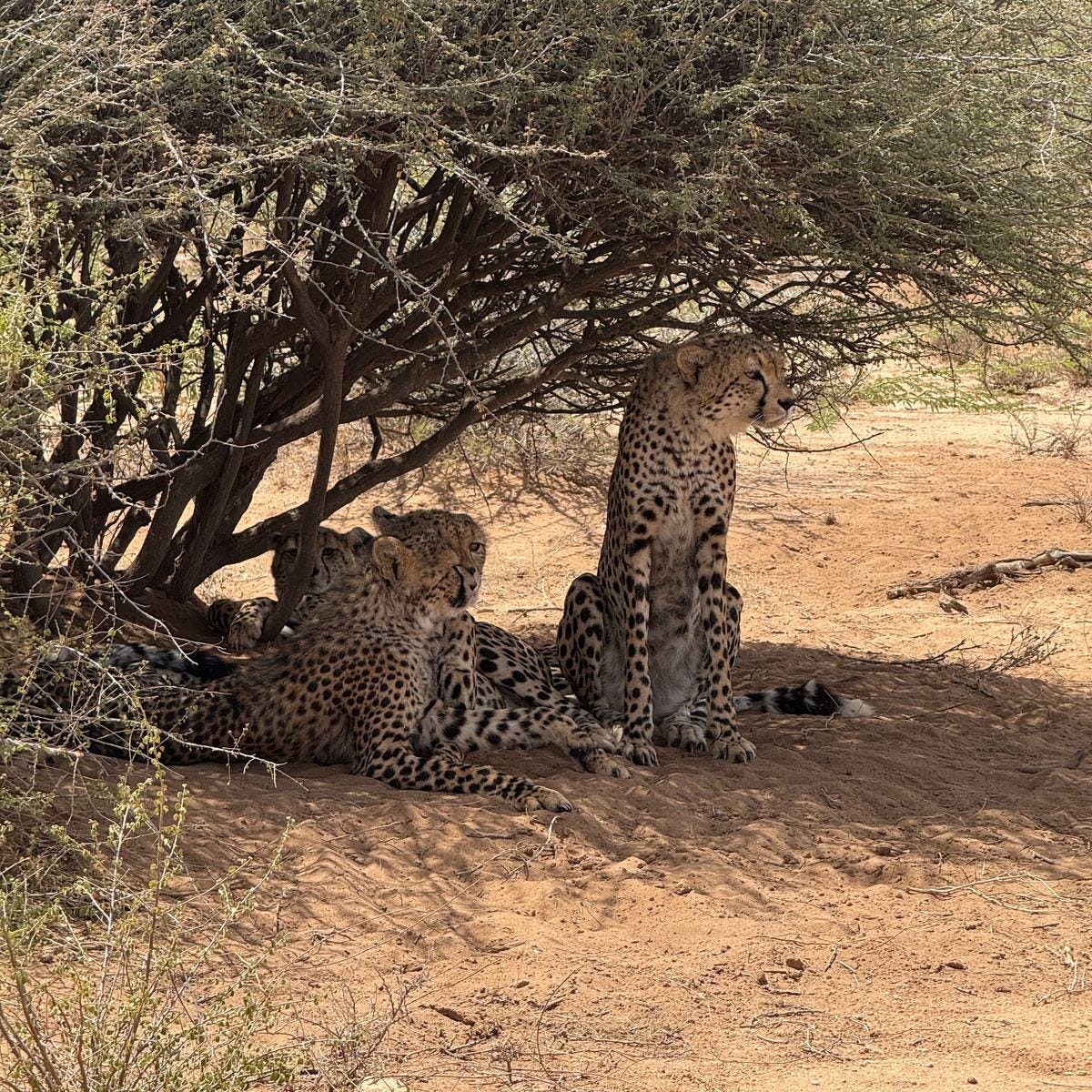
On Wednesday, we drove out to the Cheetah Conservation Fund’s sanctuary in the Geed-Deeble savannah. As of March, it held 127 cheetahs, rescued from traffickers. Villagers who catch a cub are paid $50 to $100. The cubs cross the Gulf of Aden to Yemen and then to buyers in Saudi Arabia and the UAE, where each sells for $15,000 to $20,000. The sanctuary estimates four or five cubs die on the way for every one that arrives.
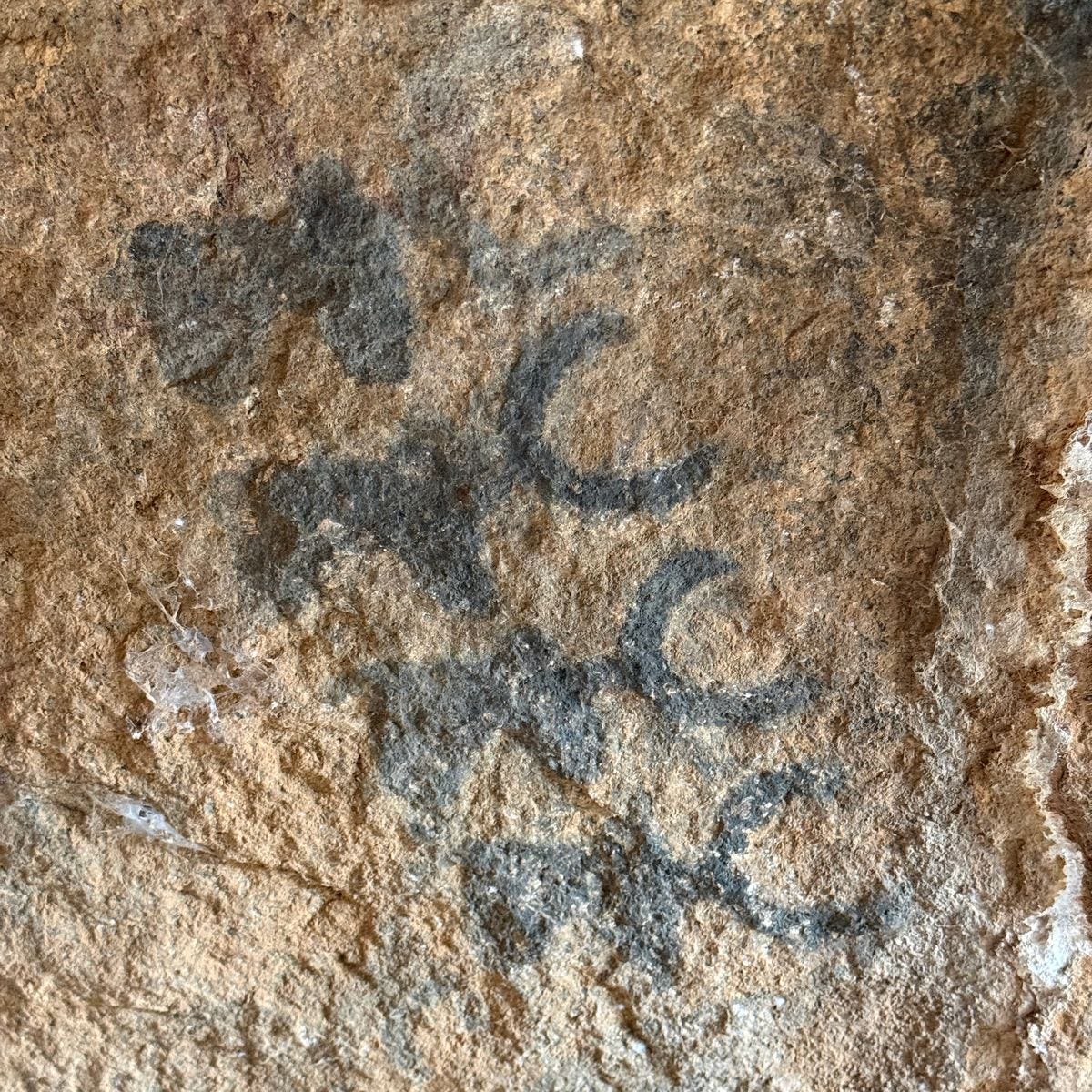
Then, we went to see cave paintings. Not at Laas Geel, the well-known site. The Somaliland government informed us it closed over a conflict with local farmers and landowners and that it was unsafe to visit at the moment. We went to Dhagax Kure instead, northwest of Hargeisa. The paintings there are mostly cattle, long-horned and humpless, along with human figures, in red and in several colors. Archaeologists date this style of painting, at Laas Geel and across the Horn, to roughly the third and second millennia BC, when people here were shifting from hunting to herding cattle.
Somaliland has sites that could easily be on the World Heritage List. But only member states can nominate them. UNESCO recognizes Somalia as the member state here, which joined the convention in 2020. Somalia has zero World Heritage Sites today (it has three on the tentative list, but none of those are in Somaliland). Recognition as a country would boost tourism, technical expertise, donors, and training.
Flag day
On Monday, at a rally in Youngstown, Ohio, Donald Trump had called Somaliland “a totally different country” from Somalia. Wednesday night, returning to the hotel, I saw the square below my window filling up. The war memorial was hung with American flags. A singer worked through patriotic songs. A screen cycled through the Somaliland flag, the American flag, and Trump, and fireworks went up over the Telesom building. The crowd crammed the square and were singing, chanting, and waving flags. I hesitated walking down to the square, but the moment was too tempting to resist.
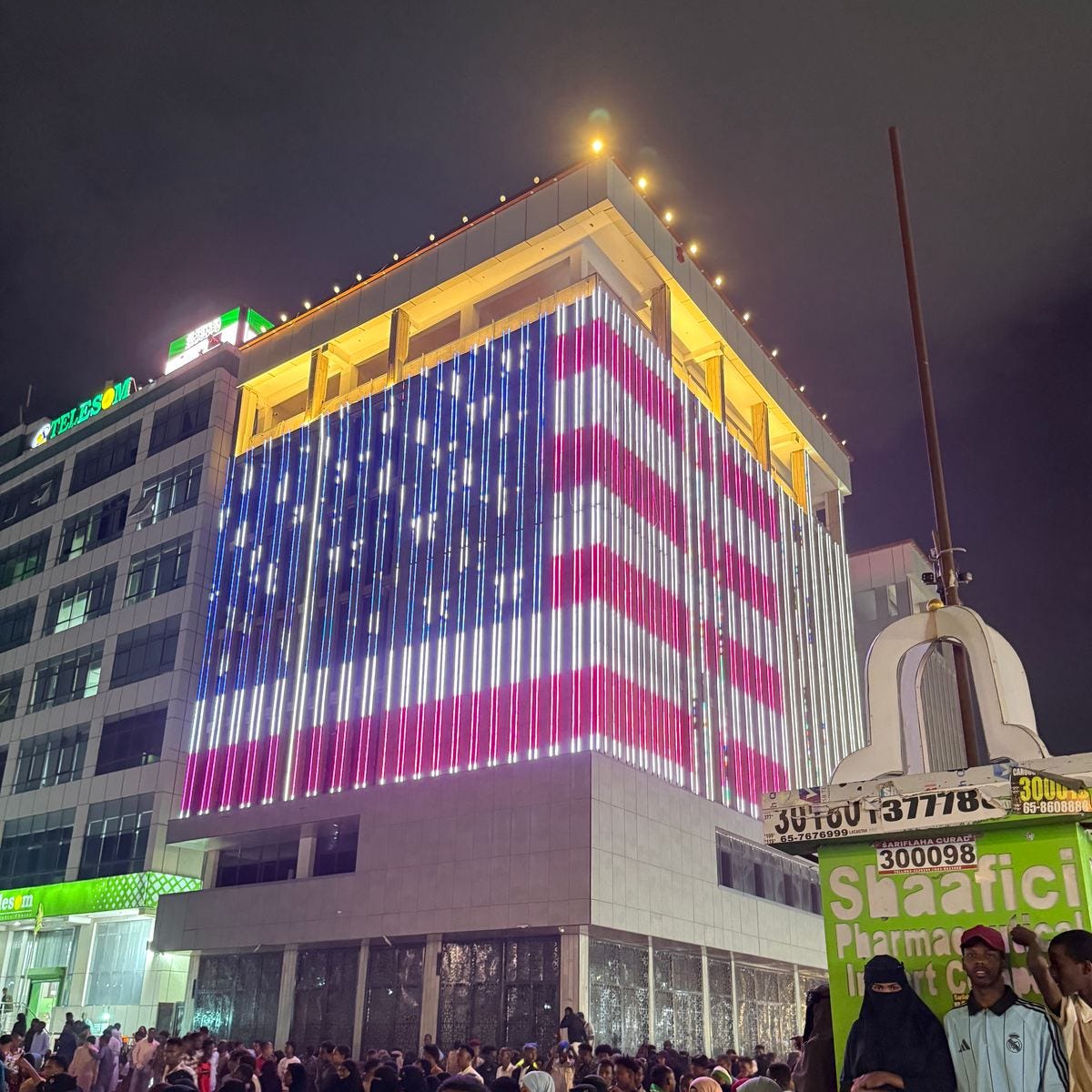
I was likely the only American in the square, and people soon discovered that. Then, a microphone and a video camera were in front of me. Put on the spot, I stated the facts. “I’m an American. I’m here in Hargeisa today where everybody is celebrating because Donald Trump said that Somaliland is a separate country. He announced that today in a political rally, so congratulations to all of you.” Somebody draped a Somaliland flag over my shoulders while I was still talking. The crowd pushed in, with people grasping me a bit. After a few minutes, I slipped to the far edge and stood with the police officers watching the Telesom office until things calmed.
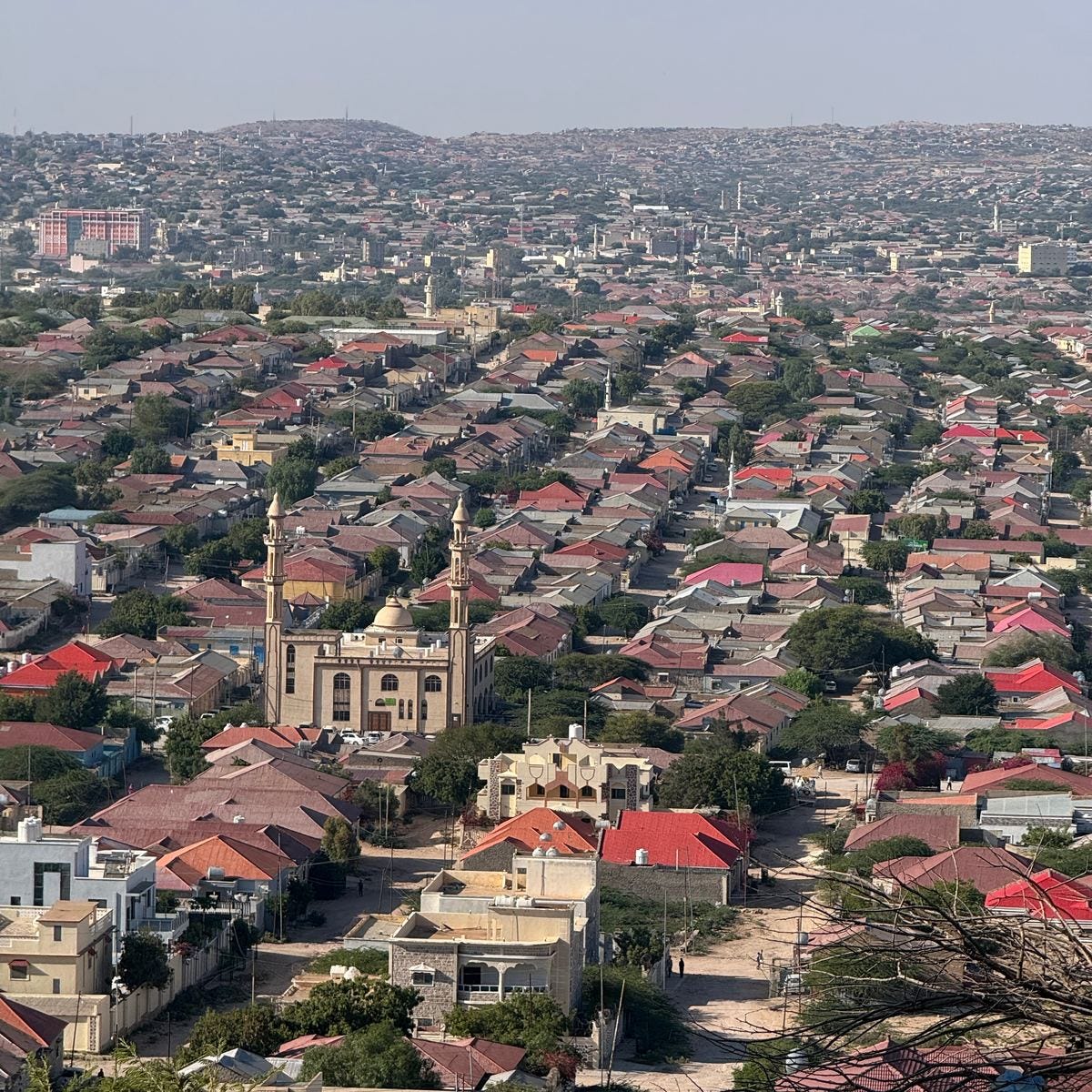
Thursday morning, before my flight, we went to the cultural center, the museum and the Commonwealth War Cemetery, where 115 Commonwealth soldiers from the Second World War are buried. We stopped at Guluf, a restaurant built inside a Soviet Ilyushin Il-18. According to Atlas Obscura, the plane was built in Moscow in 1962 and flew for 29 years for Romania’s state airline. Starting in 1998, it flew around Africa for the operation of the arms trafficker Viktor Bout until its landing gear failed, and it was retired near Hargeisa. Driving around town, the American flags were still on the light poles, alongside signs that said “Thank you, President Trump.” We drove to the city’s highest point for a last view of Hargeisa before heading to the airport. On the rocky slope in front of me, camels grazed. In front of me, urban sprawl of red, grey, and brown rooftops. A supermarket, a “Social Cafe,” telecom tower, and heavy construction equipment was all within eyesight.
The clip of me ran the next day on an Indian news channel, under a headline calling Somaliland a “breakaway region.”