


Our boat pushed out onto Lago Suchitlán too early for me, but not for the birds. The water was flat and silvery blue, and the birds were already working. There were herons standing in the shallows, something dark gliding low over the surface. Guazapa Volcano rose in the distance, its slopes visible in the morning light. From out on the lake, it looked like the edge of the world.
I had thought little about what had happened on those slopes. I’d been moving so fast through Central America, I felt like a musician on tour, not knowing what city I was playing in. But on the boat, it clicked. During El Salvador’s civil war, from 1980 to 1992, the Farabundo Martí National Liberation Front held the high ground of Guazapa. They lobbed mortar fire down into Suchitoto for years. U.S.-made A-37 jets dropped 500-pound bombs on the town in retaliation. Rebels blocked the road from San Salvador and mined the road out. At its lowest point, war had reduced a city of 22,000 to maybe 2,500 people. For two and a half years, there was no running water, and those who stayed behind walked to the nearby lake to get it.
The very lake I had been floating on, watching birds.
Place of Birds and Flowers
Suchitoto sits 47 kilometers north of San Salvador, on a ridge above the lake. Its name comes from Nahuatl — place of birds and flowers — and the multicolored colonial exteriors of streets live up to it. The cobblestones remain, the facades painted in earthy yellows, reds, blues, and pinks. Founded in 1528, Suchitoto was the original site of San Salvador before the capital moved south. In the mid-19th century, an indigo boom brought wealth and architecture. About 6,000 people live in the historic core today. It does not feel like a town that has been through what it has been through.
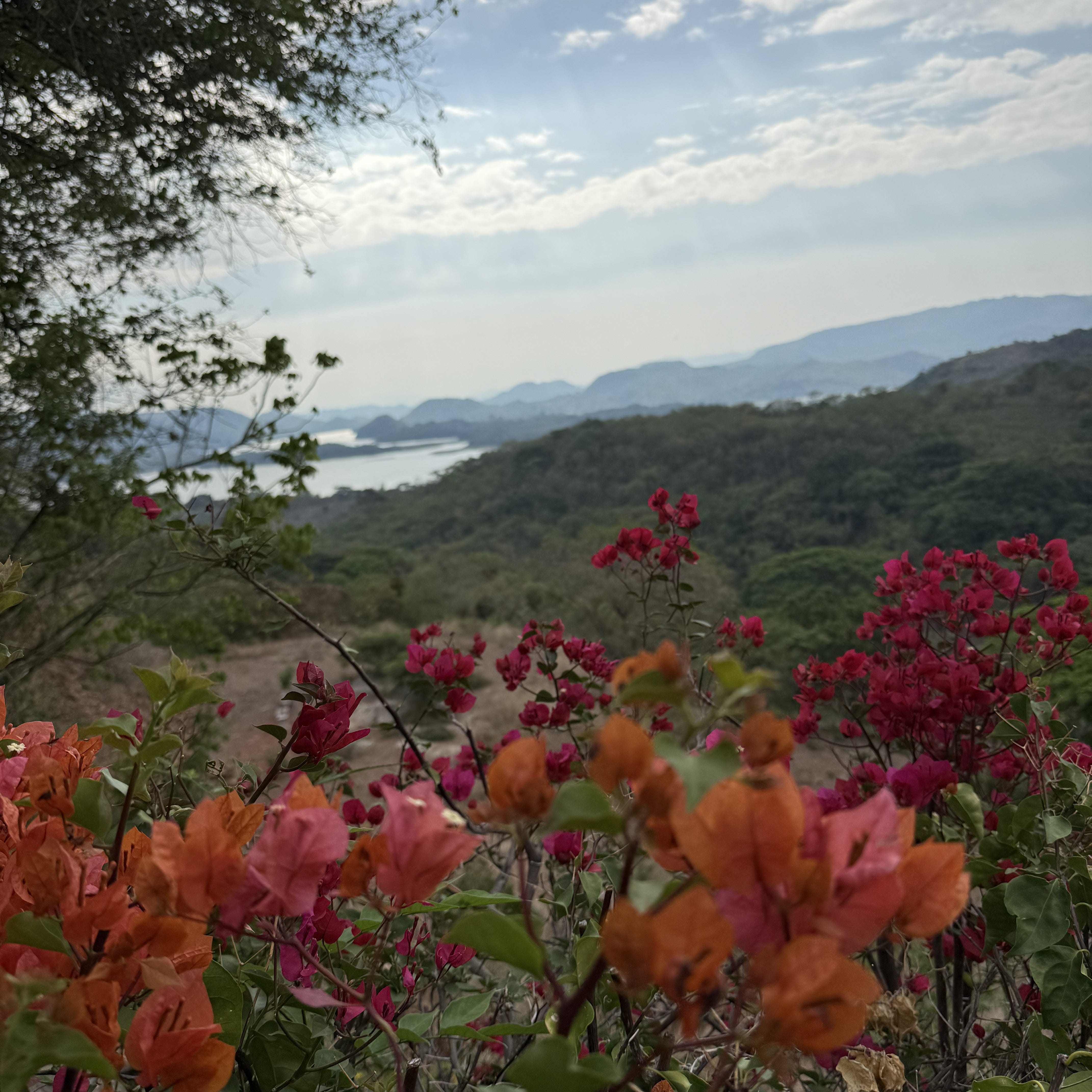
Until you pay attention.
In San Martin Park, children played soccer. None of them were alive during the war. The buildings they grew up in, the painted facades and restored colonnades, are what the town looks like now. They have no memory of the before. They ran past each other, unaware of the ghosts of the past that live in the very spot they’re playing.
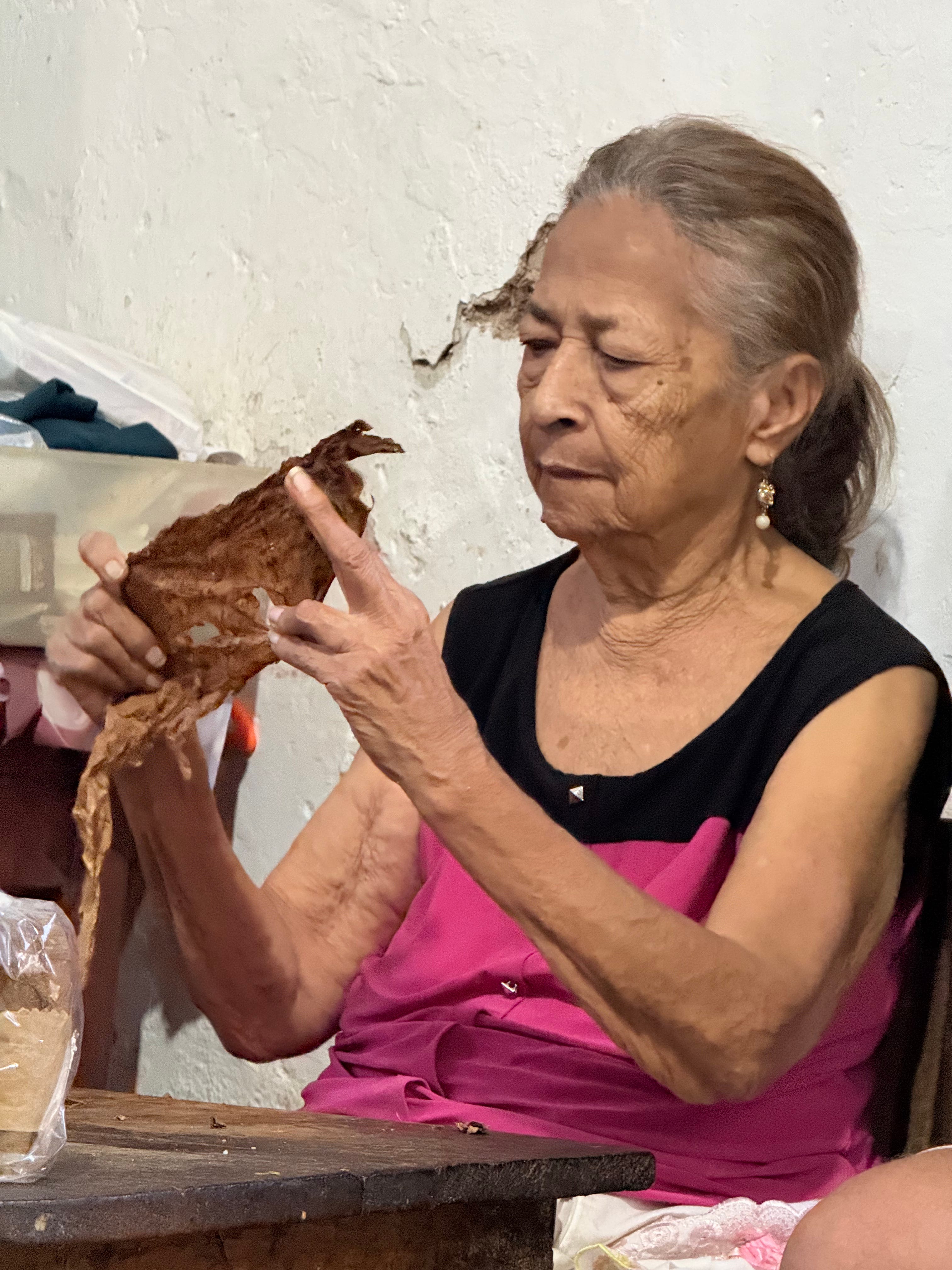
In another block of the small town, a woman sat at a wooden table, rolling cigars. She was one of the last in town who still did it. Her hands moved through a rhythm older than the war, older than even the country. Not far away, the Centro Arte para la Paz — the Center for Art and Peace, founded by nuns in an abandoned convent — offers children painting, music, and theater. When the nuns fled the war, they abandoned the building. Now kids come here after school.
The Museum of Alejandro Cotto is the home of a filmmaker who, the story goes, intervened to stop the bombing of Suchitoto during the war. His house is a maze of collected objects — art, photographs, curiosities from around the world — and a private chapel with painted ceilings that opens onto a terrace overlooking the lake. He organized the Festival Permanente de Arte y Cultura. He believed that culture was the thing worth protecting first, because it could be the thing that would bring people back.

The Pattern
This pattern of “the beautiful place with the terrible recent past” shows up more than you expect.
In Oman, I walked through Bahla Fort, a UNESCO World Heritage Site, its thick walls baked pale in the desert sun. Inside, at eye level, were bullet holes. Dozens of them, still there, unrestored, from the civil conflict that consumed the country before Sultan Qaboos took power in 1970. The guide mentioned it in passing. The surrounding visitors were photographing the sunset, and children were running through the nooks of the mud fort.
Outside Delhi, I have passed through villages that were the site of mass killings after Indira Gandhi’s assassination in 1984 — coordinated attacks against Sikhs that killed thousands in days. The villages look like villages. Children play there too.
This past February, I was in Kuwait. I walked through the old souk, drove past the towers along the Gulf, and moved through a city that felt prosperous and calm. The Iraqi occupation of 1990 is a passing mention in a history book for anyone under 35. A few weeks after I left, drones were flying over the city. Buildings were hit. The places I had stood in, photographed, walked through — suddenly in the news differently.
This is a particular vertigo I’ve gained from travel. You stop seeing places as fixed. You see them as points on a timeline that has not ended.
The Lake
Back on the lake that morning, the volcano stood there, clear against the sky. The birds did not care about any of it.
I will admit something: I was a little let down when I learned that Lago Suchitlán was artificial. It’s a reservoir created in 1973 when a hydroelectric dam flooded the fertile valley, displacing many and covering up archeological sites. Artificial lakes always feel slightly fraudulent, standing in for the real thing. But sitting on it in the early morning, watching the light change on Guazapa, I stopped caring. Whatever the lake was before, it is what it is now. The birds have moved in. Fishermen go out on it every morning. The town’s reflection appears in it.
Maybe that’s what I get from Suchitoto, if a place can teach anything. The town was founded on the site of an indigenous village. Its indigo wealth was built on the brutal encomienda system. Its colonial streets survived a civil war that much of the outside world ignored until it was over. And now children play soccer where once there were house-to-house gun battles. A woman rolls cigars, and birds cross the lake at dawn, and the volcano stands there, the way it always has, holding whatever it holds.
Almost every place that looks peaceful has earned this moment in time.

Great Bbackground information on those places 👍🏼